
Our technology
Technology & Theory
Beyond the dictionary: the ideas and data structures behind Kamusi, with the papers and talks that explain them.
The theory of Kamusi
Beyond the dictionary
Kamusi is different from other dictionaries - in fact, we’ve far outgrown the idea of “dictionary” as you know it. Our goal, “Towards Every Word in Every Language”, requires a new way of thinking about how words, meanings, and translations relate to each other. At the same time, AI has emerged as an urgent threat toward doing knowledge and technology right for most languages; Kamusi addresses the oncoming tsunami of AI slop with real, confirmed data from natural human intelligence.
The model
How Kamusi organizes language
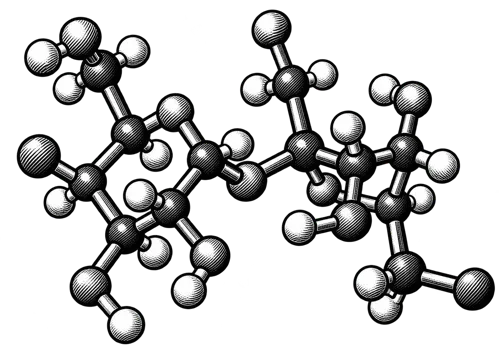 Molecular Lexicography (opens in a new tab)Molecular Lexicography(opens in a new tab)
Our data structure treats language as a matrix of interrelated elements, linking terms at conceptual and functional nodes across time and space. For example, "see" has many meanings (visualize, understand, visit...), with many forms (sees, saw, seen, seeing), each with different pronunciations, relations within one language and across languages, geographic variations, and historical transformations. We've deployed a unique crystallographic approach to chart as many linguistic particles as humanly possible.
 The Kam4D Data Matrix (opens in a new tab)Kam4D Lexicographic Database(opens in a new tab)
Words have meanings, shapes, sounds, relationships, histories, and geographies. Our four-dimensional matrix interweaves these elements across languages, time, and space. It's complicated, but click the link to have it demystified for you with smurfs, ducks, and lemurs.
 Concept Alignment (opens in a new tab)DUCKS in a Row audio presentation(opens in a new tab)
We align concepts, not spellings. This allows us to link words that might have one form for multiple ideas (polysemy) without crossing wires. For example, the ideas of 'light' (weight) vs 'light' (brightness) are segregated accurately across languages.
 Party Terms (Multi-Word Expressions) (opens in a new tab)Video · YouTube(opens in a new tab)
Multi-word expressions (MWEs) like 'kick the bucket' are often not possible to understand from the words that compose them. We treat these as unique, meaningful lexical entries, solving idiomatic mysteries that stump standard translation systems. We call them "party terms" because they are words that form special bonds when they dance together.
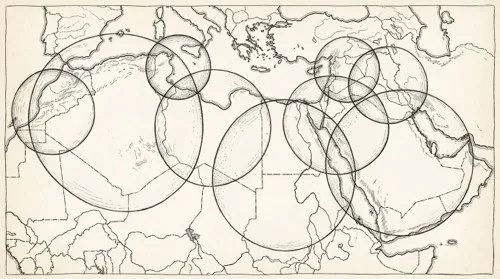 A Solution for Dialects (opens in a new tab)Locating the ebb and flow of dialects(opens in a new tab)
A dialect is a variety of a language that has substantial differences from other varieties of the same language. The differences are fluid - some terms may be local, some are the same across all speakers, and some used in a range somewhere in the middle. Our solution is to geotag occurrences of each term, to produce dialect clouds rather than dialect boundaries.
 Kamusi versus Google Translate (opens in a new tab)Kamusi versus Google Translate Head to Head(opens in a new tab)
By focusing on high-quality lexicons with precise concepts, we provide the foundation for a quantum leap in automated translation accuracy. Google beats us with full sentences among major lucrative languages. We win everywhere else.
 Bridges - Terms without Translations (opens in a new tab)kamusi.org(opens in a new tab)
A concept in one language may not have an equivalent term in another. A bridge is the definition of the original concept, written in the second language, or a translation of a usage example. For example, "snow" might not exist in an equatorial language. Speakers can write a definition for "snow" as a bridge, without coining a brand new word for an unknown item.
 Terminology (opens in a new tab)Kamusi for Technology, Economy, Rights, Medicine, and Science(opens in a new tab)
Language authorities often coalesce to produce term sets for their language - agreed-upon local equivalents for concepts that need to match meticulously across languages. Our tool (KamusiTERMS, returning soon) enables experts to propose, discuss, and decide what those terms should be.
People and AI
Real data from real people
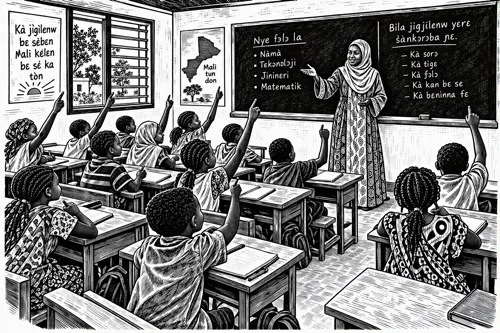 Data from Humans (opens in a new tab)Paper · EPFL(opens in a new tab)
We learn languages directly from the people who speak them, turning the knowledge in people's heads into structured, shareable data. We seek scholars and citizen linguists, including "digital native" young people who can help transmit their mother tongues to modern platforms.
 Not from AI (opens in a new tab)Article · MultiLingual(opens in a new tab)
AI needs “Large” language models. Most languages lack adequate data. We refuse to fake it with hallucinations; we build the real foundation.
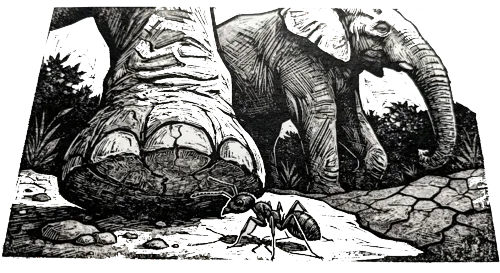 Large Language Models and Small Language Data (opens in a new tab)Article · MultiLingual(opens in a new tab)
AI runs on Large Language Models (LLMs) with an emphasis on large. The 13 trillion token English LLM is 8 orders of magnitude larger than most of the 512 African languages that have any AI-ready lexical data - and over 1800 African languages have no digital footprint at all. We race against 'slop' by digitizing real human data for languages around the world, for a digital future trained on Human Natural Intelligence.
 AI “In the Loop”, not In Control (opens in a new tab)How AI Cured Coronavirus and Delivered Universal Translation(opens in a new tab)
AI is a great tool for peering deeply 🔎 into stored human knowledge (LLMs) to uncover patterns and data nuggets. As an investigative tool 🛠, it can be helpful when good data exists, and increasingly awful as its data supply plummets off the cliff for most languages. We use it for restricted tasks, such as uncovering real-world usage examples, but not as a trustworthy oracle that might, for instance, attempt to create artificial usage examples on its own.
Who it serves
Languages and the people who speak them
 Linguistic Equity (opens in a new tab)Paper · EPFL(opens in a new tab)
Billions are excluded from the digital economy by language. Fixing that depends on codifying their words for computer processes.
- Communities First (opens in a new tab)Kamusi(opens in a new tab)
We support a language's speakers, not Big Tech agendas. For Africa, we work intimately with ACALAN, the language organ of the African Union.
- Endangered & Indigenous Languages (opens in a new tab)Kamusi(opens in a new tab)
Many languages are at great risk, and the communities are not equipped to protect their knowledge as they would like. Our tools are designed to assist when wanted, but not to impose uninvited.
- Equipment for Students (opens in a new tab)Kamusi(opens in a new tab)
Kids learn best in a language they understand. We aim to open STEM and other domains to students worldwide in their mother tongues.
- Cultural Currency (opens in a new tab)Paper · EPFL(opens in a new tab)
We seek unique terms to enrich the global knowledge set. Language is the tapestry of human heritage; documenting it is our obligation.